The short answer
Alaska’s main cruise season is May through September, with some operators adding April and October sailings; verify the exact line and date rather than assuming availability. For the weather comparison below, Juneau airport normals show July with the warmest average daily high among May–September and September with the highest normal monthly precipitation. Those are one-station historical normals, not forecasts for a sailing or the whole route.
In this guide
- How do I choose the best month for my Alaska cruise?
- What does May through September look like in Juneau climate normals?
- How much daylight should I expect?
- Should wildlife or a glacier day decide the month?
- How should I compare the actual sailings available in each month?
- Is a shoulder-season date a good value?
- What is the quickest way to shortlist a month?
- Common questions
- Sources and scope
How do I choose the best month for my Alaska cruise?
The broad planning frame is May through September; the official Alaska tourism site notes that some cruise lines add shoulder-season itineraries in April and October. That describes general season patterns, not a promise that a particular operator or route sails on your chosen date. For month choice, start with three priorities: the route and named scenic days you want, the ports and shore time in the exact sailing, and the weather/daylight tradeoffs you are willing to accept. Then compare the total trip—airfare, hotel nights and excursion plans as well as cruise fare.
- Use May–September as the broad season frame; check individual April/October availability directly with a line.
- Shortlist actual sailings and confirm their ports, scenic-sailing days and hours.
- Use the climate table as one-city context, not as a forecast for your cruise.
- Recheck the local forecast and service hours nearer travel.
Compare route and port choices · Build a packing list around your month and activities
What does May through September look like in Juneau climate normals?
The NCEI 1991–2020 monthly normals show a gradual warm-up into July, followed by cooler averages and more monthly precipitation later in the season. NWS Juneau also describes June–August as the warmest months locally and late spring/early summer as a relative dry season; that is regional context, not a route forecast. NWS notes that precipitation varies widely across Southeast Alaska. The month figures below come from Juneau International Airport only.
Scroll sideways if you need to see more columns.
| Month | Average daily high | Average daily low | Normal monthly precipitation | Planning read |
|---|---|---|---|---|
| May | 57.6°F | 40.3°F | 3.51 in | Cooler reference month; plan adaptable layers. |
| June | 62.4°F | 46.8°F | 3.82 in | Warmer than May on average at this station; still compare current forecast. |
| July | 64.0°F | 50.1°F | 5.14 in | Warmest average daily high among these five months; rain remains possible. |
| August | 62.9°F | 49.1°F | 6.41 in | Similar average temperatures to July with higher monthly precipitation normal. |
| September | 56.1°F | 44.1°F | 9.15 in | Cooler normals and the highest monthly precipitation total in this comparison. |
How much daylight should I expect?
Daylight changes with date and location. NWS Juneau gives 18 hours 18 minutes of daylight at the summer solstice and 6 hours 21 minutes at the winter solstice. That Juneau reference explains why day length is long around midsummer and shorter later in the season, but it does not tell you the usable shore window: the ship’s arrival/departure times and excursion schedule do that. Check date-specific sunrise and sunset for each port when planning photography or independent time ashore.
- Use the exact port date and location when checking sunrise/sunset.
- Use the published port-call hours, not daylight duration, to plan shore time.
- Do not infer that an excursion, wildlife sighting or scenic view is guaranteed by longer daylight.
Sources [2]
Should wildlife or a glacier day decide the month?
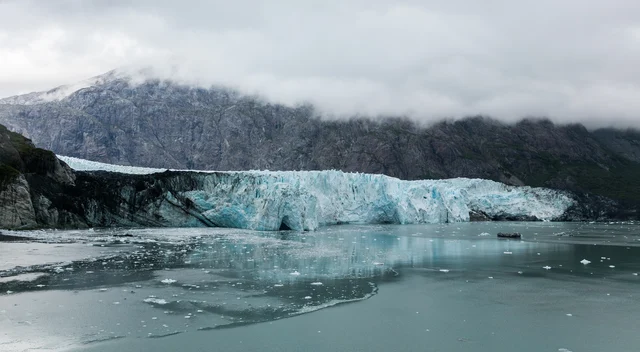
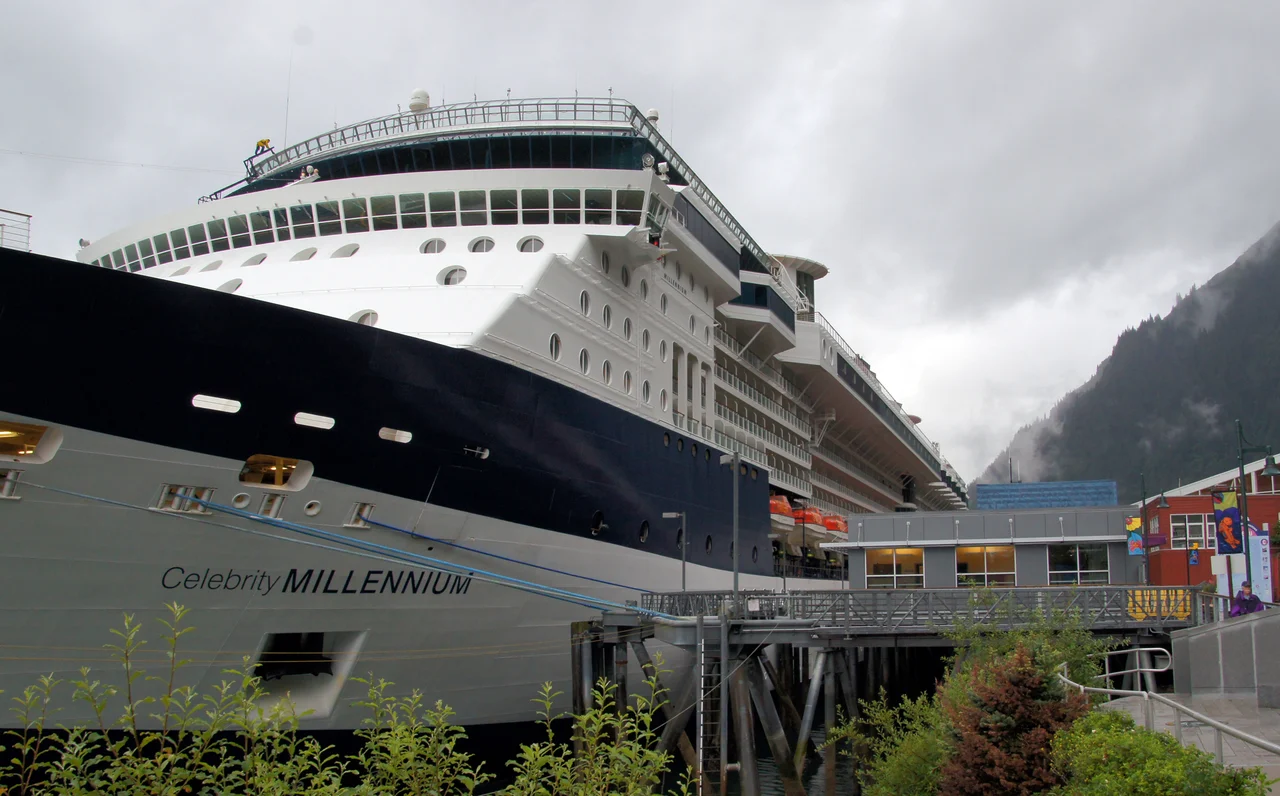
Treat wildlife and glacier viewing as possibilities, not promises. This comparison does not make a month-by-month sighting forecast. If a named glacier or scenic area is central to your trip, read the exact sailing description and verify whether it is a port call or scenic sailing; route, conditions and operating decisions can affect what happens on the day. Compare the itinerary itself rather than choosing a month from a wildlife calendar alone.
- Check the exact ship/date itinerary for named ports and scenic areas.
- Confirm which items are scheduled as port calls versus time aboard in a scenic area.
- Keep the decision grounded in published route details, not guaranteed wildlife or glacier access.
How should I compare the actual sailings available in each month?
The climate table cannot tell you which ships operate on your preferred date. Open the cruise line’s current date-specific sailing page and compare endpoints, port order, port-call hours, scenic-sailing areas, and any land-tour connection. Availability is operator- and year-specific, so confirm it directly before paying. For the route-level tradeoffs, use the Alaska cruise planning guide and compare the itinerary rather than relying on a generic month label.
Scroll sideways if you need to see more columns.
| Compare | What to record | Why it matters |
|---|---|---|
| Route | Ports, port order and scenic-sailing names | Two dates in the same month can offer different routes. |
| Port time | Arrival/departure times and excursion meeting/return times | Day length does not equal time ashore. |
| Trip logistics | Embarkation/disembarkation dates, flights and hotel nights | The lowest cruise fare may not be the lowest trip cost. |
| Weather context | Climate normals by reference location and forecast near departure | Normals describe averages, not a particular day. |
Is a shoulder-season date a good value?
It can be worth comparing, but climate normals alone cannot establish value. Put cruise fare, flights, hotel nights, transfers, excursions and schedule fit on the same trip-cost sheet. Then compare actual departure dates; do not assume lower advertised fare means lower total cost or that a month has the same availability every year.
- Compare total trip cost on the same basis for each candidate date.
- Check cancellation terms and what is included directly with the line and travel provider.
- Recheck the exact sailing before making a decision.
What is the quickest way to shortlist a month?
Use this order: name the route feature you care about most; shortlist actual date-specific sailings that include it; compare their port hours and end-to-end cost; then use the Juneau normals and exact-date forecast as context. If you are still deciding what to bring, the Alaska cruise packing list turns your month and excursion plan into a bag-by-bag checklist.
Common questions
Which month is warmest in Juneau?
In the NCEI 1991–2020 normals for Juneau International Airport, July has the warmest average daily high among May through September at 64.0°F. It is a historical station average, not a cruise-date forecast or a claim about every port.
Sources [1]
Is September too rainy for an Alaska cruise?
The Juneau airport normal is 9.15 inches of precipitation in September, higher than the May–August values shown here. That does not predict a particular trip; compare the exact itinerary, then check the forecast near departure.
Sources [1]
Will I see wildlife if I sail in a certain month?
This guide cannot promise a sighting or establish a reliable month-specific guarantee. Treat wildlife as a possibility and compare the route, port time and excursion details for your sailing.
Sources
Does a month tell me how long I can explore each port?
No. Daylight is not the same as the ship’s port-call window. Check the date-specific itinerary and excursion schedule, then use local sunrise and sunset information if it affects your plans.
Sources
Sources and scope
Check the current terms for your ship, sailing and booking. This guide combines published source material with planning suggestions; it does not claim firsthand travel experience.
- Summary of Monthly Normals: Juneau International Airport, 1991–2020Source checked 2026-10-21.
Monthly average daily high/low temperatures, mean temperatures, precipitation totals and wet-day counts for the Juneau International Airport station, generated 2026-10-20. This is a 1991–2020 station normal, not a forecast or a full-route climate summary.
- WFO Juneau’s Local Area InformationSource checked 2026-10-21.
NWS describes broad precipitation variation across Southeast Alaska, generally wetter fall/winter and a late-spring/early-summer relative dry season, June–August as warmest, and Juneau solstice daylight durations. Also gives Juneau-specific warm-when-wet layering guidance. Does not establish weather for a particular sailing or every port.
- A Comprehensive Cruise Packing ListSource checked 2026-10-21.
Princess-published packing examples: layers and heavier outerwear for Alaska, check forecast, walking shoes, sneakers for active excursions, and hiking shoes for nature/adventure itineraries. Line-specific dress and venue guidance is not generalized as universal policy.
- How to Plan the Best Alaska CruiseSource checked 2026-10-21.
Official Alaska Travel Industry Association tourism page describes the main cruise season as May–September and says many lines add shoulder-season itineraries in April and October; it also states routes vary by line and trip length. This is destination-level seasonal context, not proof that a specific line or dated sailing is available. Its sunny-month and whale-watching language is not used here.